
How it works
Asphalt shingle rejuvenation, explained in plain English
Why shingles age, what happens when they lose their oils, and how ShingleGuard's treatment may help restore flexibility to a qualifying roof.
What's in a shingle?
Most asphalt shingles are a fiberglass mat coated in asphalt and topped with mineral granules. The asphalt waterproofs the shingle and holds the granules in place. Oils within the asphalt are what keep it flexible.
A flexible shingle can expand and contract through hot days and cool nights, flex in the wind, and keep a firm grip on its protective granules. That flexibility is what rejuvenation is designed to help restore.
- Mineral granulesShield the asphalt from UV and add color
- Weathering asphaltHolds granules; its oils keep shingles flexible
- Fiberglass matThe reinforcing core
- AsphaltWaterproofing layer
- BackingKeeps shingles from sticking together
Sun and heat slowly draw the oils out
Over years of UV exposure and high temperatures, the asphalt in your shingles oxidizes and loses the lighter oils that keep it pliable. The result is a shingle that becomes dry, stiff and increasingly brittle.
Newer shingles
Asphalt is rich in oils. Shingles flex with heat and cold and hold their granules.
Aging shingles
Sun and heat draw oils out over time. Shingles start to dry, fade and lose some granules.
Brittle shingles
With fewer oils, shingles become stiff and brittle, and more prone to cracking and granule loss.
Brittle shingles are more likely to crack, lose granules and struggle in wind and storms. Once enough granules are gone, the asphalt underneath is exposed to even more UV, and aging can speed up.
Replenishing what the sun took out
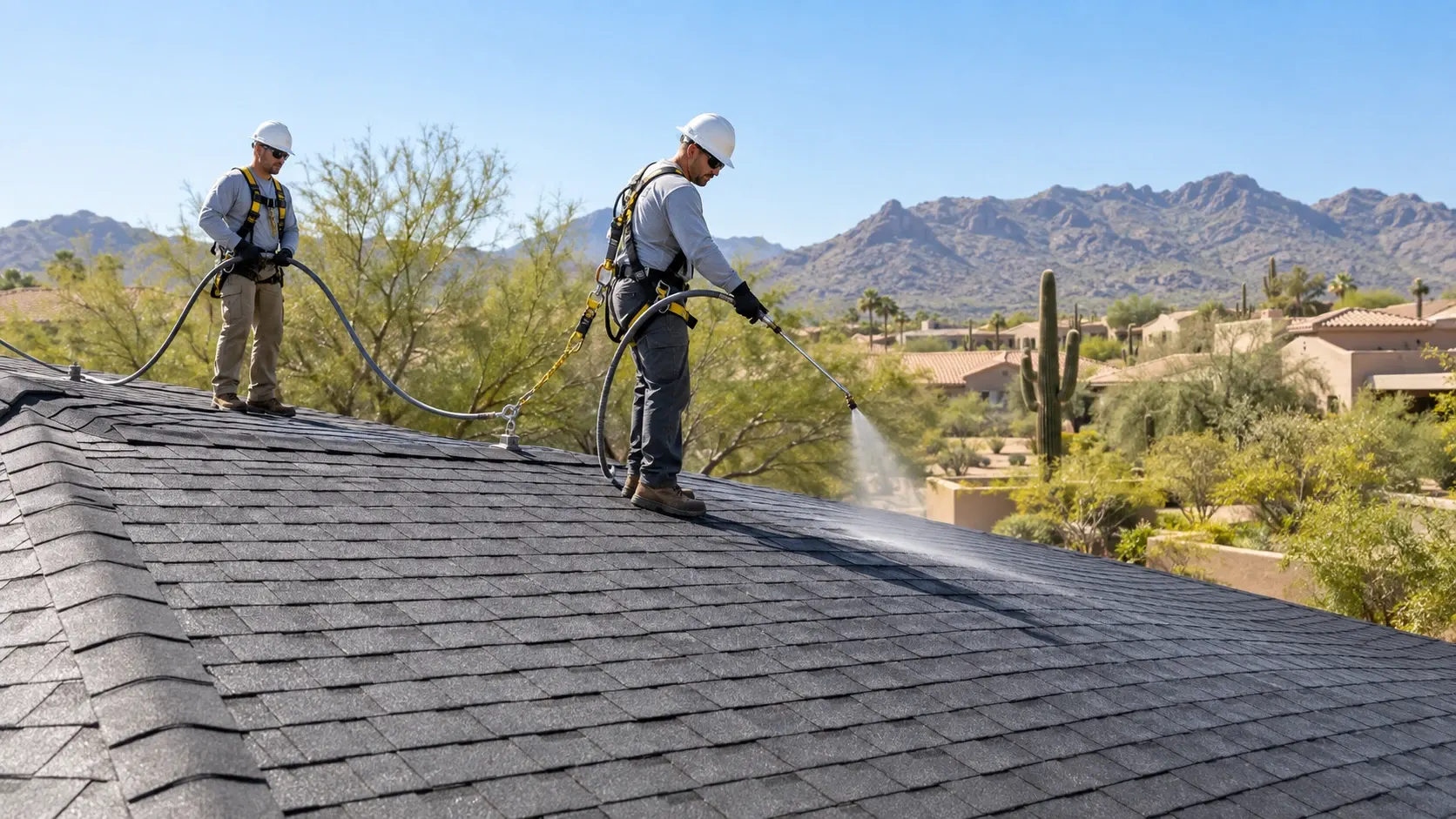
ShingleGuard applies a USDA-certified biobased oil treatment designed specifically for asphalt shingles. It's absorbed into the asphalt and replaces the petroleum oils the Arizona sun and heat have baked out, which may help restore flexibility and help the shingles hold their granules.
Think of it as an oil change for your roof. The treatment is designed to be drawn to aged, oxidized asphalt and to soak through the shingle rather than sitting on the surface. After it’s applied, sun and heat help it react and bond with the worn asphalt, so Arizona’s climate works in its favor.
- Absorbed into the shingle, not painted on top like a coating
- Faded shingles often look richer and less weathered afterward
- No tear-off, no new shingles, no dumpster
- Your roof keeps its shingle appearance
- USDA-certified biobased and designed for safe use around homes
- Backed by a ShingleGuard 5-year warranty
- One treatment supports shingle flexibility and performance for about 5 to 6 years
 Illustration
A treatment with real credentials
We chose our rejuvenation treatment because it's backed by certification, independent testing and published research, not just marketing.
USDA Certified Biobased
Certified through the USDA BioPreferred program, with 96% biobased content from renewable sources rather than petroleum.
Patented formula
Protected by a U.S. patent issued in 2025 for treatments that improve aged, brittle asphalt binders.
Independently lab-tested
Tested by an independent asphalt testing laboratory in 2020, 2021 and 2024, showing improved shingle flexibility and better granule adhesion.
Untreated shingles shed nearly 2x the granules
In independent lab testing on 13-year-old shingles, untreated shingles lost 13.2% of their granules, nearly twice the 7–8% lost by treated shingles.
Class A fire rating maintained
In independent ASTM E108 fire testing, treated roofs kept their Class A fire rating, and flame spread was slightly reduced.
University research, peer-reviewed
Developed from Iowa State University research, with results published in a peer-reviewed asphalt technology journal in 2025.
Bonds with aged asphalt
University lab analysis showed the treatment chemically reacts with aged asphalt, rather than just softening it the way a plain oil does.
Flexibility restored to nearly new
In Iowa State University testing, treatment brought shingles from roofs more than 15 years old back to nearly new flexibility.
Clean runoff, near-zero VOCs
Water-based with no odor. Independent testing measured just 0.02% VOCs and found no detectable PAHs or PCBs in rain runoff from treated shingles.
Results on any individual roof vary with its age and condition.
See the full lab resultsThree steps from assessment to treated roof
- 1
Free roof assessment
We inspect your shingles up close, checking flexibility, granule coverage and any damage, then tell you honestly whether rejuvenation makes sense.
- 2
Protect & tune up
On treatment day we protect landscaping, pools and surfaces, then tune up the roof: Perma-Boot covers on the vent pipes, a few replacement shingles, resealed vents and flashing, and clean gutters.
- 3
Rejuvenate
We apply our bio-based treatment evenly across the shingles, where it is absorbed into the asphalt to replace oils lost to age, sun and heat. It's typically dry within about an hour.
Rejuvenation isn't for every roof, and we'll tell you
The right time to rejuvenate is while shingles are aging but still sound. Here's a general guide. Your free assessment gives you a definite answer.
Often a good candidate
- Asphalt shingle roof that is aging but structurally sound
- Faded or dry-looking shingles
- Some granule loss (granules in gutters or at downspouts)
- Shingles that feel stiff rather than flexible
- No active leaks or soft spots in the roof deck
Usually needs repair or replacement instead
- Active leaks, rot or soft decking
- Widespread cracked, curled or missing shingles
- Significant hail or wind damage
- Tile, metal, foam or flat roofs
- Roofs at the very end of their service life
Not sure where your roof stands?
Schedule a free assessment. We'll check your shingles up close and explain what we find, whether or not rejuvenation is the right fit.
Licensed & Insured | AZ ROC #368164
Prefer to text? Send us a message