
By ShingleGuard Technologies, LLC · Published
The short answer
For most asphalt shingle roofs that are aging but still structurally sound, yes. Rejuvenation costs a fraction of a replacement and may help your shingles stay flexible and serviceable for longer, so you get more out of the roof you already paid for. The key is treating the roof at the right time, while the shingles are drying out but still intact. This guide shows you how to tell if your roof is there.
What roof rejuvenation actually does
Asphalt shingles rely on oils in the asphalt to stay flexible. After years of sun and heat, those oils oxidize and bake out, and the shingles become stiff and brittle. Brittle shingles crack more easily and have a harder time holding on to the mineral granules that protect them from UV.
Rejuvenation is a spray-applied treatment that soaks into the asphalt and replaces some of those lost oils. Think of it as an oil change for your roof: routine maintenance that keeps a sound roof working longer. The goal is simple: help aging shingles bend instead of crack, hold their granules longer, and stay in service longer before replacement becomes the only practical option. You can read more on how rejuvenation works.
Unlike a paint or roof coating, rejuvenation works inside the shingle and keeps your roof looking like a shingle roof. It’s preventive maintenance for a sound roof, which is why it works best before problems like leaks or missing shingles appear.
A great fit when…
- You have an asphalt shingle roof
- Your shingles look faded or dry, feel stiff, or are shedding some granules
- The roof is aging but still structurally sound, with no active leaks
- You want to get more years out of the roof you already paid for
- You want to avoid the cost and hassle of a replacement for as long as possible
Repairs come first when…
- There are active leaks or water stains inside
- The roof decking is soft or rotted
- Many shingles are missing, torn or badly curled
- There is significant hail or storm damage
- The shingles are so worn that they crumble when bent
Not sure which describes your roof? Try our 1-minute roof self-check, or book a free assessment. We’ll check your shingles up close and give you a straight answer, with no pressure.
How to run the numbers
The most useful question isn’t “how much does rejuvenation cost?” It’s “what is each year of roof life worth to me?” Here’s a simple way to work it out:
- 1Start with what a new roof would cost for your home.
- 2Divide that by the number of years a new roof is expected to last.
- 3The result is roughly what one year of roof life is worth to you.
A hypothetical example
Say a new roof would cost $15,000 and last about 20 years, so each year of roof life is worth about $750. If a rejuvenation treatment costs about one-sixth of that, around $2,500, it pays for itself once it keeps your roof in service a little over 3 more years.
A single treatment supports shingle flexibility and performance for about 5 to 6 years before the next maintenance treatment. Every year your roof keeps going beyond that 3-year break-even point is money you keep.
These numbers are for illustration only. Your actual cost depends on your roof’s size and condition, and your free assessment includes a written estimate so you can run the numbers for your home.
Putting off a large expense has value of its own, too. It gives you time to plan and save, and to replace the roof on your schedule instead of being rushed into it. For a side-by-side look at cost, time, disruption and waste, see rejuvenation vs. replacement.
Why it matters more in Arizona
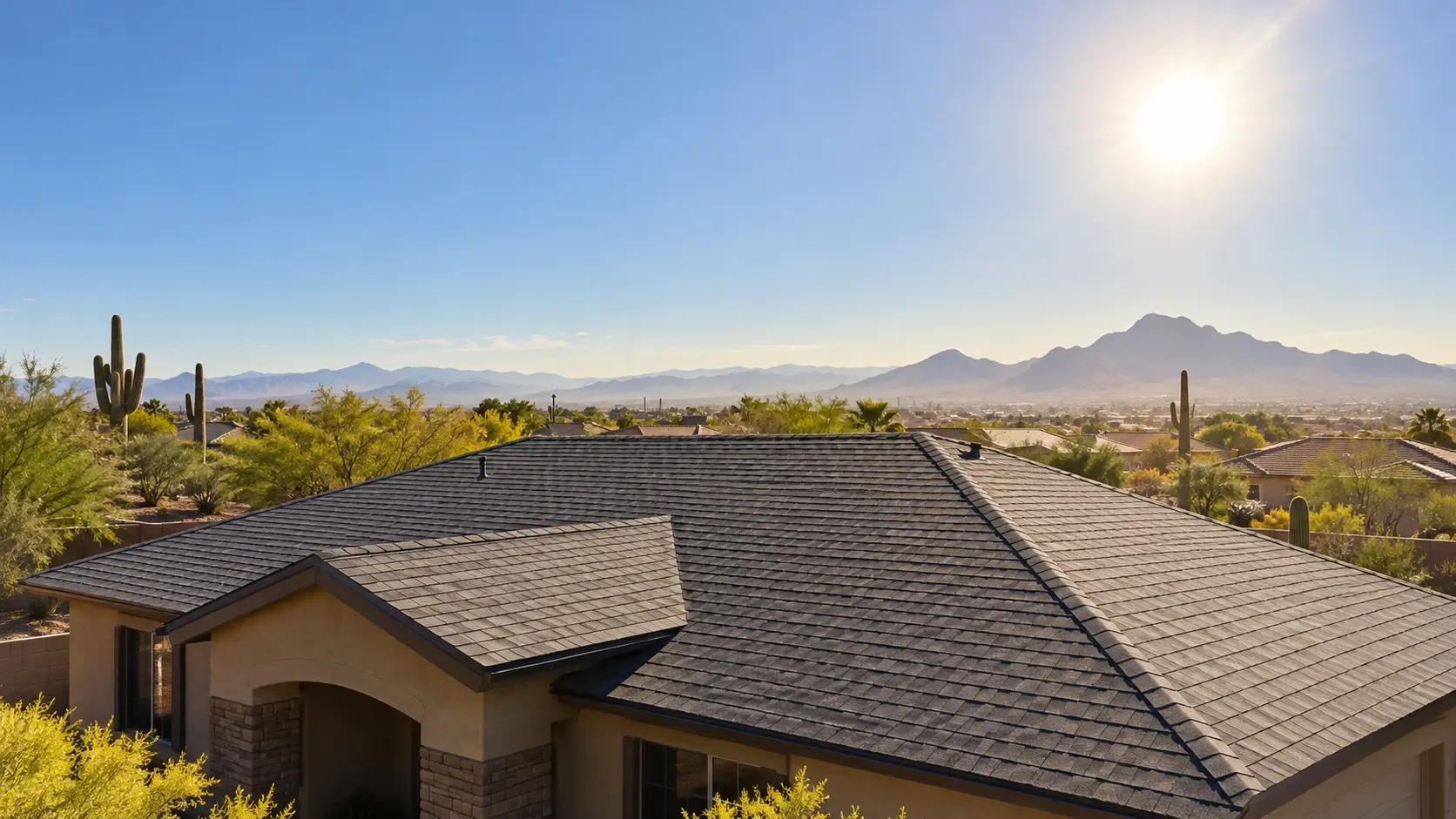
The desert is hard on asphalt shingles. The Phoenix area averages more than 100 days a year at or above 100°F, and the U.S. Department of Energy notes that conventional roofs can reach 150°F or more on sunny days. Add intense UV and monsoon storms, and shingles here tend to lose their oils faster than in milder climates.
That often means Arizona shingles turn stiff and brittle while the roof is otherwise still sound, which is exactly when rejuvenation makes the most sense. Learn more about how Arizona weather affects asphalt roofs.
Not all treatments are equal
If you are considering rejuvenation, ask what product will go on your roof and what backs it up. The treatment ShingleGuard uses is:
- USDA Certified Biobased: Certified through the USDA BioPreferred program, with 96% biobased content from renewable sources rather than petroleum.
- Patented formula: Protected by a U.S. patent issued in 2025 for treatments that improve aged, brittle asphalt binders.
- Independently lab-tested: Tested by an independent asphalt testing laboratory in 2020, 2021 and 2024, showing improved shingle flexibility and better granule adhesion.
- Untreated shingles shed nearly 2x the granules: In independent lab testing on 13-year-old shingles, untreated shingles lost 13.2% of their granules, nearly twice the 7–8% lost by treated shingles.
- Class A fire rating maintained: In independent ASTM E108 fire testing, treated roofs kept their Class A fire rating, and flame spread was slightly reduced.
- University research, peer-reviewed: Developed from Iowa State University research, with results published in a peer-reviewed asphalt technology journal in 2025.
- Bonds with aged asphalt: University lab analysis showed the treatment chemically reacts with aged asphalt, rather than just softening it the way a plain oil does.
- Flexibility restored to nearly new: In Iowa State University testing, treatment brought shingles from roofs more than 15 years old back to nearly new flexibility.
- Clean runoff, near-zero VOCs: Water-based with no odor. Independent testing measured just 0.02% VOCs and found no detectable PAHs or PCBs in rain runoff from treated shingles.
Every roof is different, and results depend on its age, condition, ventilation and exposure. The best way to know what to expect from yours is a free assessment. For the details behind these credentials, see the lab test results.
Benefits beyond the price
- No tear-off, no dumpster in the driveway and no crew on your roof for days.
- Your existing shingles stay on the roof and out of the landfill.
- ShingleGuard backs every treatment with a 5-year warranty.
Questions to ask before you decide
- 1Will you inspect my roof up close before recommending anything?
- 2What product do you use, and is it certified and independently tested?
- 3Is the warranty in writing, and what exactly does it cover?
- 4Are you licensed with the Arizona Registrar of Contractors? (You can verify any license at roc.az.gov.)
- 5Will I get a written estimate before any work begins?
At ShingleGuard, we’re glad to answer every one of these, and we’ll walk you through each one during your free assessment.
The bottom line
For an asphalt shingle roof that is aging but still sound, rejuvenation is one of the smartest ways to protect your investment. It may buy you years before a replacement, for a fraction of the cost, with no tear-off and a 5-year warranty behind it.
The easiest way to find out if your roof qualifies is a free ShingleGuard assessment. We’ll give you an honest answer and a written estimate, with no obligation. Have more questions? See our FAQ.
Licensed & Insured | AZ ROC #368164
Prefer to text? Send us a message